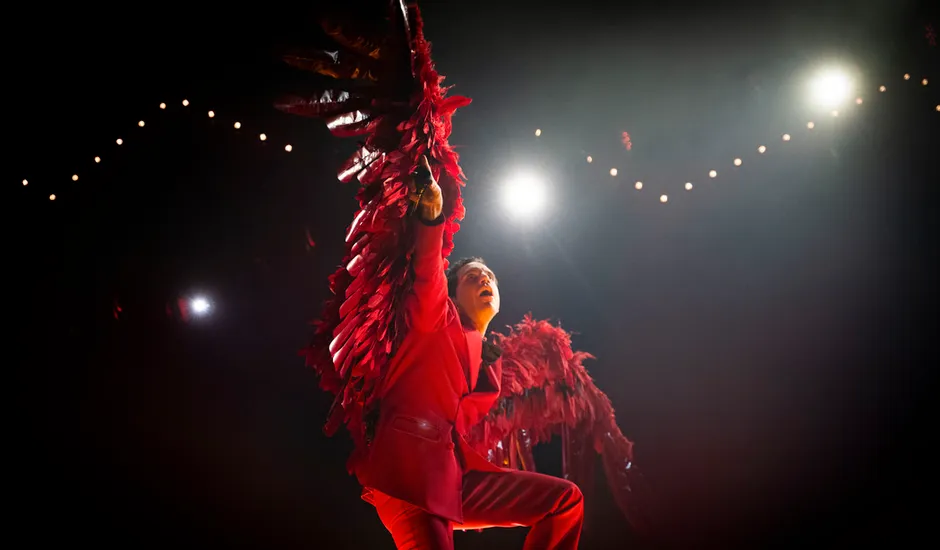
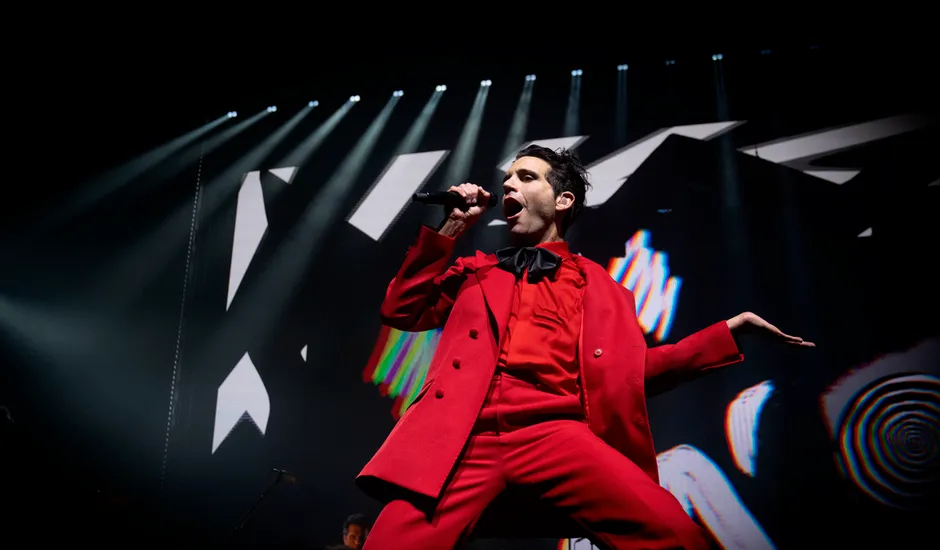
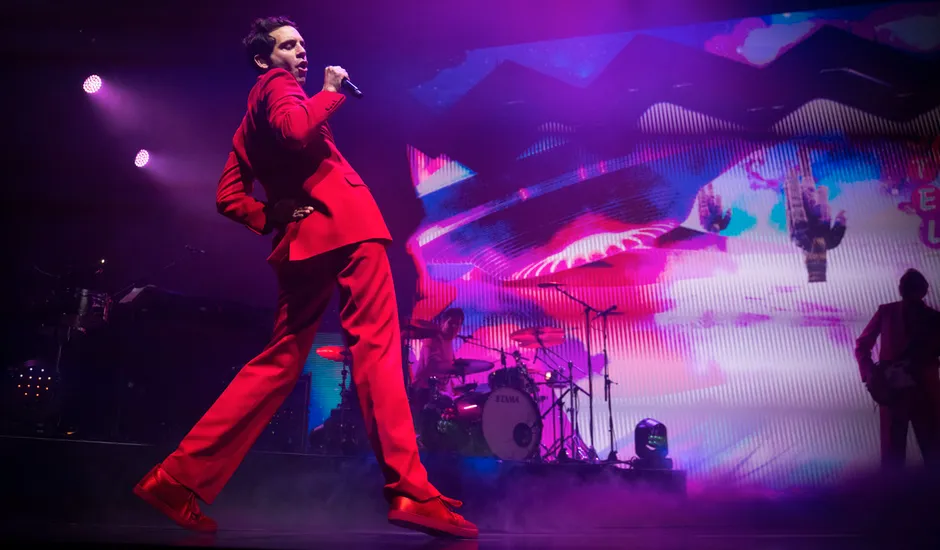
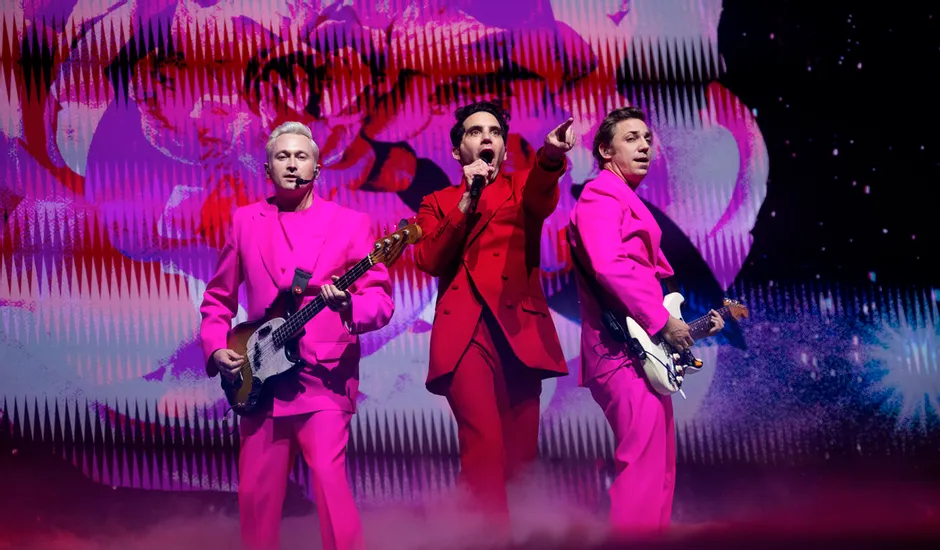
Now Playing: The Origin of Love - Mika


March

15 March - Caprices Festival, Switzerland
17 March - Macka KüçükÇiftlik Park, İstanbul

April

25 April - Le Printemps de Bourges, France

May

26 May - Festival Mawazine, Morocco

June

23 June - Parc Borely, Marseille, France


Maintained by: Ingrid & Luke
Online: online
Host: Fan-sites.org
Designed By: Shawn Corson.Com
Launched: 08-05-2007
Theme Version: Smokey Clouds


Mika Fans is in no way affiliated with Mika or with his family or Universal Music. We have no contact with him whatsoever. All content is copyrighted to MikaFans.net, unless otherwise stated. Read our host's Privacy Policy and DMCA. If you feel any content found on this website infringes your copyright, please email the staff..


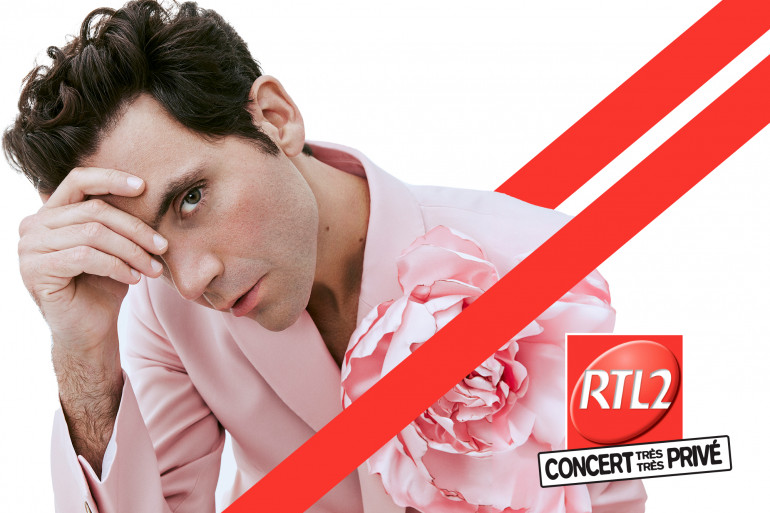
Click on the image to go to the Press Conference gallery.

Written By: Ingrid || Filed Under: Interviews || Date Posted: May 09 || 0 Notifications


Click on the image to go to the photoshoot gallery.

Click here to go to the showcase gallery

TV-ad

Radio interview

Click here for the MNM interview.

Written By: Ingrid || Filed Under: Interviews,Media || Date Posted: May 07 || 1 Notification


Written By: Luke || Filed Under: Interviews,Promotion,Videos || Date Posted: Apr 28 || 1 Notification


Zack Rosen
Zack Rosen

CEO, Zack Rosen Industries (ZackRosenIndustries.com)
GET UPDATES FROM Zack Rosen
Like
5
The Nowhere Boy: Mika Finds Confidence in Coming Out
Posted: 04/18/2013 5:50 pm
Read more
Mika Gay , Mika Grace Kelly , Mika Heroes , Mika Life In Cartoon Motion , Mika Nowhere Boy , Mika Origin Of Love , Mika The Boy Who Knew Too Much , Mika The Nowhere Boy , Mika Coming Out , Mika Interview , Mika Sexual Orientation , Mika , Mika Sexuality , Gay Voices News

share this story
87
40
2
Submit this story

2013-04-18-MikaSHOT1_025.jpgGay pop superstar Mika blasted out of the gates in 2007 with the indelible mission statement “Grace Kelly” and a Swiss-cheese view from inside the closet. Six years later he is firmly out and boasting a new elevator pitch in the title track of last year’s Origin of Love.

Where “Kelly” traded in to-the-rafters choruses and obfuscating winks toward identity politics, “Love” cuts the theatrics and trusts its universal metaphor of “attraction is addiction” as a solid emotional lead-in to an album of intellectual pop love songs.

Where Mika was once a jumbo pack of sour-centered bubblegum, he’s now a candy befitting his upcoming 30th birthday — say, a vegan gummybear at the bottom of a kombucha bottle: sweet, sustainable, effervescent and with an unexpected resonance. The singer recently completed a small U.S. tour, including Washington, D.C.’s ultra-polite 6th and I Synagogue, further proving that a pop star can change his stripes.

This interview was done over the phone on April 5, 2013.

Zack Rosen: Is it safe to say you’ve grown up a little since you first released Life in Cartoon Motion in 2007?

Mika: I do most of my growing up on my record. As I move on, as I develop my songwriting, and as my life evolves, it’s always going to be captured in the records. I like to stay true to myself and not buy a different persona. Strangely, I feel that I become increasingly reclusive in my normal life and more open and candid in my music.

Rosen: Your second album, The Boy Who Knew Too Much, seemed really nervy and jagged. It sounded to me like someone backing down.

Mika: The second album is part two of the first. The first is pinks and greens, and the second is a similar layout but in blue and purple. They were bookending each other. This new one, The Origin of Love, is a different thing. It’s like a new movie.

Rosen: How do you feel about your first single, “Grace Kelly,” six years out?

Mika: I feel exactly the same about it. It was a perfect representation of me as a 23-year-old. Because they are my songs and born from real life, they represent something real, not songwriter purchases. It helps them age gracefully. This whole thing about turning 30, everyone keeps haranguing me about it. I say I have a midlife crisis every time I start and finish a record.

Rosen: Are you still “identity mad”?

Mika: I have no idea who I am. I’m “The Nowhere Boy.” I was brought up in many different cultures, moving around all the time, and I find my identity in my songs. I project the identity I want to have throughout the songs that I write. Identity for me is something that has to be played with and explored, and not become complacent about or uninterested in.

Rosen: Did coming out free you to expand who you are as a musician?

Mika: There was a de-complexing that happened in my life. I got to a point where I’m really happy. Not on a daily basis; I don’t skip to the coffee shop. I’m not that kind of person. I was happy with the freedom I had to write what I write. It got to the stage where I said, “I’ve earned this myself.” I’ve been given lots of guidance and help in getting to the stage where I’m comfortable in my skin, not hating my surroundings or feeling powerless, so I’m writing the songs that recognize that.

Rosen: Who gave you guidance?

Mika: I had a teacher at school who basically made it his mission to always get me out of trouble. He was the librarian at my school, a very eccentric Englishman who moved to Australia and lives in Scotland, I believe. He saw I was having trouble conforming not only with stuff like making friends but in my work. I was having a tough time keeping up with this tough academic school. He made up a sport for me that got me off school two afternoons a week. He used to pretend I was working in the library, but then he would book me a music room, and I’d write songs and show him the stuff I was making. He gave me space to not conform, and get away with it.

Rosen: What’s his name? He might like to know that you remember him.

Mika: Hugh Eveleigh, the former librarian at Westminster School. He was amazing. There’s people who look out for oddity, and instead of punishing it, they help it, and so many people have done that along the way for me. I guess what I’m saying is that all of that has to do with tolerance, being able to look at life in a slightly different way and be allowed to do so.

[We get sidetracked talking about the nature of celebrity. Mika checks back in with this:]

Mika: I did a show last night in Philly at the Union Transfer. Someone was smoking the most nasty chronic pot in the front row, and all the smoke was coming on stage. Normally that doesn’t bother me, but this was so chemically enhanced, and it blocked my brain, and I couldn’t remember any of my lyrics and couldn’t keep time on my piano. Only the front section understood what was happening. I was singing my song “Popular,” and I stopped it three times. I got to the second verse three times and forgot what was supposed to happen next. I felt like I was 14 on a camping trip, smoking for the first time. Whoever was smoking that shit needs to sort themselves out.

Rosen: What’s your favorite song on Origin of Love?

Mika: A song that no one knows, “Heroes.” It’s based on an A. E. Housman poem called “The Lads and Their Hundreds to Ludlow Come Into the Fair,” from the First World War. Most of a generation of young men were wiped out in the UK. Housman describes these men and how almost all of them will never come back, will die in their glory and never return. I was reading an article about the Army recruitment process in America, how so many people are being recruited from other countries at 19 years old in exchange for security and education and money for their families. They have no idea about the history or geography of the country, fighting a war they don’t understand. I reinterpreted this Housman poem; I tried to make a modern version of it and put it on a pop record. The idea of the album is that it’s a collection of love songs. Happy, bitter. Love songs about religion, about sexuality, about a mother and her son, one like this about a soldier that you’ve never met. Lyrically, I like that.

Written By: Ingrid || Filed Under: Interviews || Date Posted: Apr 22 || 0 Notifications


Mika was not in love when he wrote the title track of his newest album. He just had a crush on someone. That belies the fact that “Origin of Love” is one of the most unabashedly romantic songs the British pop star has ever written, so sweet it could give you a cavity after multiple listens.

From the air I breathe, to the love I need

Everything I know

You’re the origin of love

From God above, to the one I love

Everything that’s true

The origin is you

“It was one of the first things I wrote after a year and a half of not writing,” says Mika, who plays a sold-out show at Royale on Saturday. “I wrote it in about 20 minutes. It’s delusional because it was written in a delusional state: What is the most pumped-up, kaleidoscopic, dreamy, flirtatious pop song that I could ever write for somebody I like?”

When told that if he played that song for someone he had a crush on, the person would likely flee in the other direction, Mika is so sheepish you can practically hear him smiling at the other end of the phone.

“That’s exactly what happened,” he says, stifling a giggle. “It was a complete disaster. That’s why you skip forward a couple of songs on the album, and you end up with ‘Overrated’ as a reaction to that. One second I’m saying I’m going to build churches in your name, and then the next song I’m going, ‘You’re worth nothing. This love is worth nothing.’ ”

Perhaps the lesson to be learned is, don’t mess with Mika.

“Oh, I’m quite harmless in real life,” he says, his voice soft and refined. “It’s just words, it’s just songs.”

Maybe so, but his latest album, his third full-length since the smash success of his 2007 debut, “Life in Cartoon Motion” (buoyed by the hit “Grace Kelly”), is also a testament to Mika’s penchant for couching heavy sentiments in fizzy dance-pop songs. The giddy choruses and big, bouncy beats are intentionally over the top, putting Mika in the same family as Scissor Sisters and even Queen. At 29, he’s a big believer in the idea of songwriting expressing who you’d like to be.

“I write songs to turn myself into something else. And then I become that and I want to become something else,” he says. “It’s the same way that songwriting is projection, it’s desire. Which is why I think that Rufus Wainwright album title, ‘Want,’ is one of the best album titles ever. We write love songs as fantasies of the kind of love we’d like to experience.”

Asked about an interview in which he supposedly said the new album is more simplistic and less layered than its 2009 predecessor, “The Boy Who Knew Too Much,” Mika scoffs at the suggestion.

“Oh, no, that was a misquote,” he says emphatically. “It was a misquote that Universal [his record label] put in my press release. Whoever wrote that press release probably didn’t listen to the record. It’s completely layered, it’s crazy dense.

“But there is something in that. There’s less deflection and mirrors, less hiding behind comic-book and cartoon characters and more use of the first person,” he allows, referring to the playful artwork that accompanied his first two albums. “Now there’s a candidness in the writing, which I felt was needed. But musically it’s not less layered.”

If anything it’s relentlessly upbeat, flush with electro-pop melodies and Mika’s glorious falsetto croon. Born in Beirut and raised mostly in London, Mika says he grew up looking to music as a source of salvation.

“It didn’t have to have a stomping beat, but it had to give me that feeling of power, because I lacked so much of it,” he says. “I fell in love with melody because it was transformative. I looked at music as something uplifting, that broke down the barrier between me and the person in front of me. There was something quite humanizing and unifying about it.”

To that end, “The Origin of Love” has a handful of songs meant to empower. “Emily, are you stuck up or are you gay?/ If you are, then that’s OK/ ’Cause it doesn’t even matter, Emily/ Emily, it’s your life and you can’t live it twice,” he sings on “Emily.”

Mika also has a wicked sense of humor. On “Love You When I’m Drunk,” he comes to grips with the truth about his beloved. “When I get a little more sober/ I know I’ll be over you.” (“Slightly tipsy,” he says of his mindset when he wrote the song.)

“The best way to make the most serious point in the world,” he says, “is to be as unserious as possible.”

Source

Written By: Ingrid || Filed Under: Interviews || Date Posted: Apr 13 || 0 Notifications


Written By: Ingrid || Filed Under: Interviews || Date Posted: Apr 12 || 0 Notifications


Gay pop singer Mika was in Vancouver when we spoke by phone two weeks ago. He was in tour rehearsals for a stripped-down 17-date mini tour behind his latest album “The Origin of Love,” which dropped in October.


WASHINGTON BLADE: What kind of instrumentation will you bring?

MIKA: There are three of us playing everything from piano to clarinet to sax to accordion to marimba to vibraphone — we have all these different instruments being played and we’re trying almost to make it sound classically influenced almost. We’ve done some scoring on a lot of this stuff just for this tour.

BLADE: How do you take highly produced dance pop and make it work with that kind of instrumentation?

MIKA: You take it back to the way it was written, to its most essential things. Things start out very basically, like maybe just piano and bass, and then build and build until you get the more dance stuff. But there’s loads of different ways to do it. It almost sounds more tribal on stage. It’s kind of like you’re getting people up and dancing and singing without all the bleeps and blowups.

BLADE: Is this where you are musically now or is it just a way to contrast it with the touring you did last fall?

MIKA: It definitely will affect the sound of my next record. We’re testing new songs and it’s already happening. The new stuff is a lot more sparse.

BLADE: The transition in your vocals from your natural range into falsetto is so seamless. With many singers it’s so much more pronounced. Was that just always the way it was or have you worked to develop and refine that?

MIKA: It’s really the result of growing up being trained by Russian classical musicians. It was like really serious professional singing. I can flip really effortlessly because I’ve been doing it since I was about 11. At the same time, my full voice range is actually quite limited. I’m technically a baritone, so pop just doesn’t work for that kind of voice and I had to develop a way to have more range. If you listen to Freddie Mercury or Prince, you see how we try to stretch it as far as you can and make it so it’s almost unnoticeable.

BLADE: Now that you’ve been out a while, what differences have you noticed career-wise?

MIKA: There’s been no change whatsoever in the people coming to the shows. It’s exactly the same demographics … I have always had this very crazy mix. Press wise, people talk about it, but it’s only one question that comes and goes because I’ve never lied or pretended to be anything I wasn’t. I refused to label myself. And the music hasn’t changed. Beyond that, I think there’s definitely a different sort of person now who comes up and talks to me on the street. That happens in a very different way. I think it’s made me slightly more approachable to some people.

BLADE: Are you in a relationship now?

MIKA: Yes I am but it’s hard. Beyond the traveling, this desire to constantly be creating … I think takes its toll on a relationship. … Relationships are about stability and that isn’t necessarily the most conducive thing to the creative process.

BLADE: You have such great hair — any tips?

MIKA: Wow, relationships to hair — that’s quite a change.

BLADE: Well, I’m trying to move fast.

MIKA: The hair thing, I don’t know. I hate washing it. I feel like you lose a bit of your brain or something every time you wash it.

BLADE: How often do you wash it?

MIKA: Maybe like once a week or something. It’s kind of skanky.

BLADE: How easily do the hooks come? Is there a large discard pile of songs that just aren’t hooky enough or can you make the hooks tighter as you write and tweak?

MIKA? With the last record I think I wrote 16 or 17 songs and I put out 15 so no, there’s not a lot of waste. It’s a very efficient writing process. I try to write like a child, to write as someone who’s allowing himself to be a child. I don’t really chase hooks, but I try to capture that feeling of being an 8- or 9-year-old girl or boy on a holiday. … I’m obsessed with the craft of thrill building.


SOURCE

Written By: Luke || Filed Under: Interviews,News Articles || Date Posted: Apr 04 || 0 Notifications


Mika has taken inspiration from the Catholic Church, Cole Porter and being gay in developing his unique style of pop music

”I’m completely uncomfortable in my own skin,” says Mika. ”I’m neurotic, self-contradictory and just unbearable.”

That may be how the international pop star sees himself, but it’s certainly not the impression you get by spending any time with the man born Michael Penniman Jr. At least since fully coming out as gay last year, the European-reared and London-based American singer-songwriter is refreshingly candid, forthcoming and friendly in conversation. He reveals himself to be as knowledgeable about — and as influenced by — the Catholic Church as he is by early pop-music pioneers, including Cole Porter and Patti Page.

Mika’s music is anything but unbearable, either. Across the span of three albums in six years, the 29-year-old has consistently made appealingly catchy tunes, both sunny and sharp — smart — from ”Grace Kelly” to ”Blame It on the Girls” to ”Popular Song,” his remake of the big number from the musical Wicked.

Those lucky enough to have snagged tickets to his intimate, sold-out concert at Sixth & I Historic Synagogue in the second week of April will hear his hits. But the artist also intends to play some songs from his back catalog, as well as other songs still in the development stage. He’ll be performing with support from two other multi-instrumentalists with whom he’s also started recording a new album.

”It sounds like a new interpretation of ’70s songwriter pop, like Billy Joel, for example,” he says. ”It’s a complete contrast to the saturated, produced stuff that I’ve been making for the last two years.”

Obviously, Mika isn’t resting on his laurels. He’s increasingly writing for others — ”some pretty cool artists, too” – though he declines to say who. (”I can’t. Scout’s honor, you know.”) Chances are, we’re talking veritable pop stars. After all, he’s recently co-written for Madonna — the unforgettable ”Gang Bang” from MDNA — as well as collaborated with Pharrell Williams and new Nickelodeon star Ariana Grande.

As Mika sums up his approach: ”It’s a constantly changing dynamic. It’s like never resting on your form or opinion. Always moving, changing.”

METRO WEEKLY: I know that you’re out now, though you’ve never really been ”in.” Last year, however, you did come out a little bit more directly.

MIKA: [Laughs.] It’s funny to hear it like that. Your whole life, and your decision-making, your choices, your drive – everything reduced to either a two- or three-letter-word. That’s the politics of sexuality. It’s so reductive.

MW: Your last album, last year’s great The Origin of Love, seemed a little lighter and sunnier and happier than the first two. I wondered if becoming more explicit about being gay had any bearing on that.

MIKA: I actually have to agree with you — I think that it probably does. It’s a kind of fearlessness, right? There’s less deflection. You get this much more candid – yet sometimes quite brutal, and brutally optimistic – un-judgmental way of writing lyrics. Which is kind of what happened.

My albums are a reflection of my life at this time, which for some reason in pop music people find that hard to believe. It’s like you assume that pop records are just these constructs from the back of [super-producer] Dr. Luke’s empire. Some think that seems to be where pop comes from. But it’s not, actually.

Pop can be brutally honest and very reflective of the life of the artist. It was totally a reflection of that. The more brutal and honest and open and candid we are with what we write, the more potential we have to actually be moving or to say something that makes you feel something.

MW: I understand that as a kid, when you lived in Paris, you were bullied.

MIKA: Oh, I was bullied my whole life. In some way I still feel like I am in some places — in some countries, let’s put it that way. People say they don’t judge me, but they do. They hate nonconformity in a lot of places. That kind of bullying is something that everyone experiences all the time, in some measure or another, in some way or another. I think it never really goes away.

But, yes, as a child, it’s particularly brutal when you’re being bullied – especially if you’re being bullied about something that you can’t ****ing change, that you didn’t ****ing choose. Because it’s just not fair! And only a **** would bully you for that. So I have to say, does the concept of being bullied for something you can’t choose anger me? Yeah, enormously. I just think it’s so stupid. It’s just bad education. Two things breed bullying, I think. It’s complacency and fear. And each is as destructive as the other…. Judging by the sound of it, you’re in New York. I can hear sirens.

MW: No, I’m in D.C.

MIKA: I just have this thing — sirens and New York City.

MW: You don’t have that in London?

MIKA: No, we don’t have that. We hear foxes mating. And trust me, I’d rather hear a siren than a fox mating. There’s nothing more horrific to hear.

MW: I don’t know what a mating fox sounds like.

MIKA: It sounds like something from a horror movie. It’s really horrible. I hear it in my garden. It’s really nasty. You’ll never look at a fox the same way again. [Fantastic Mr. Fox filmmaker] Wes Anderson got it completely wrong.

MW: You grew up primarily in London, right?

MIKA: I was born in Beirut, grew up in Paris and then London. A lot of my vacations, whenever we could, were in the states. But today I live in London. And I have a house – this old ruin from the ’20s – in Miami, by an architect called Russell Pancoast, that I’ve been trying to restore for the past three years. It’s this crazy thing. When you walk in, you think you’re walking into Sunset Boulevard.

Miami is a funny place. A lot of people think of it as terrible clubs and stuff, but I think it’s a really fascinating place. The South American and Latin American influence is overwhelming, in a really good way. And I was discovered in Miami. That’s where I was first making my demos. That’s where I’ve written, overwhelmingly, the three albums’ worth of songs. I never really talk about the fact that I work so much in Miami, but I do. I like going there. It seems like I’m in this other world. That’s what I feel like when I’m in Miami.

MW: I know you work with your sister Paloma, and your sister Yasmine designed the covers of your first two albums. How many siblings do you have?

MIKA: I have three sisters and one brother. I work with all of my family. We’re all in the arts. We’re like a weird collective, an immigrant mafia. [Laughs.]

My little brother is an architect. My other sister is a jewelry designer studying at [Central] St. Martins. Paloma, for many years, worked in production, but at the moment is not working. And then Yasmine is an illustrator and painter. I don’t know why we all ended up in the arts.

MW: Your parents didn’t necessarily groom you to be in the arts?

MIKA: We came from nowhere. We are the nowhere kids. And when you come from nowhere, you create a world around you. That’s what we did.

MW: You’re saying you came from nowhere because you moved around a lot growing up?

MIKA: Well, we’re the children of first-generation Americans [but have] never lived in America. We identify with New York City, in such an affectionate way, yet we’ve always lived in Europe and abroad. My sister has lived in China. So, it’s like we come from nowhere. We’re the nowhere kids. We had periods in our lives where we’ve had a lot of money. My father did really well. And then, overwhelmingly, periods in our lives where we had absolutely nothing, lived in the English equivalent of a motel for four years, running away from taxes and rents that we couldn’t pay in France. Such ups and downs.

MW: What do your parents do?

MIKA: My father worked in finance. He was far too honest, though, to work in finance. That was his problem. If only he could have been a little bit more crooked, he would have been a lot richer.

My mother was a dressmaker, and she specialized in children’s clothes. We grew up surrounded by thread and materials, because my mother had her workshop in the kitchen and in the living room. So we had her and her, like, 10 dressmakers who were making children’s clothes all the time and selling them in shops under different labels. And then she stopped that, because with five kids and a father who’s never around, I think she feared that we would be seriously ****ed up.

MW: You got used to costume changes early on? And playing dress-up?

MIKA: Oh, yeah, absolutely. Can you imagine? My life was a giant dressing-up-off! Our apartment was a mess, because it was a workshop. And everyone knows that an apartment that’s a mess is the most creative place to ever grow up, because when it’s a mess, you make it into anything you want. And there were clothes everywhere – dressing up was actually quite the serious part of growing up. Dressing up wasn’t just a stupid thing that was done at some children’s party. We all dressed up, all the time, as different things and different people. And stay in character for, like, the whole day. It’s really weird. I look back on it now and I’m just like, well, no wonder I didn’t have many friends. [Laughs.] But you know, we were five — we were a gang. So it protected us.

MW: Do you think you’ll ever have kids yourself?

MIKA: Yeah, why not? I’d love to. It’d be great. The problem is — you know, everyone’s always worried, especially in Europe at the moment, ”Oh, should gay people be allowed to have children?” But it’s more like, should someone with my job and profession be allowed to have children? It’s kind of like, if you don’t have enough time, and you can’t actually go home and visit your dog, what the hell are you supposed to do with a kid?

MW: Did your family have any trouble with you being gay?

MIKA: A little bit, to begin with. But then, you know, tough ****, get over it.

MW: Your success must have helped.

MIKA: Oh, no, success has nothing to do with it. It’s more about ignorance. You can love someone and realize that they’re being ignorant. And you can fight it slowly. I guess I learned a lot about how to deal with the tolerance of people’s misgivings when it comes to sexuality, because I learned it within my own family. I never got angry, I never was violent about it. I was never vengeful. I was just like, okay, in time, and in trust.

It was just ignorance. It just took time. But it certainly wasn’t about success. Because success doesn’t validate anything. I actually think success compounded the whole situation. It was just like it made it all weirder.

MW: Just being honest and comfortable in your own skin — that had more to do with their acceptance?

MIKA: Oh, I’m completely uncomfortable in my own skin. I’m completely uncomfortable. [Laughs.] I think that’s why I write songs, because I always want to be something else. And I can turn myself into anything if I write a song. I visualize that I want to sing like a 16-year-old goth, and then I write a song about it, and I feel like that person. I’m neurotic, self-contradictory and just unbearable. And for all those reasons, I write.

MW: Did you grow up practicing religion?

MIKA: Yes, I am still a Roman Catholic. And I grew up a Melchite, which is one of the oldest forms of Christianity. The Masses are in Aramaic, and it’s a Lebanese form of Christianity that is similar in some ways to Greek Orthodox, but it’s not. It recognizes the pope. And a big part of my life growing up was church, and the ceremony of church. Added to that, when you’re a child and you sing, inevitably, 50 percent of the material that you’re going to be doing, even for professional jobs, is going to be religious-based, in a church. So the show biz of church – the preparation that goes into those ceremonies – was a very big part of my training growing up.

It’s just that no one ever talks about the impact of ceremony as you grow up. I saw [filmmaker Pedro] Almodóvar in an interview where he walked into a church from his childhood, and he just literally, verbatim, went through every single move – ’cause I think he was an altar boy – of the incense, the way it swung, the way it smelled, the preparation, the monotony of it. The theater of it. It has a very big part to play in how you approach work, I think.

MW: Well, it’s definitely influenced your work.

MIKA: I think so. Yes, it did. It’s definitely a running theme in my work.

MW: In the song ”The Origin of Love” you even create your own religious Latin chant. Or at least I assume it’s your own.

MIKA: It is, exactly. I mean, it’s a mixture of Latin and Spanish. So there’s ”Madre deus Deus machismo.” And the whole song is about church. The whole song is about religion. It’s about the Roman Catholic Church, which I love dearly – even though I’m not a bigot and I’m not in denial of the human condition. Yet, at the same time, it’s a very strange thing, ’cause I’m very respectful of that world. But I give myself the privilege to, I don’t know, take what I want and not be distracted by the political noise of religion. Because it’s the political noise that sucks. At the end of the day, religion and spirituality and faith, whatever forms and doctrines it comes in, they’re very important things. I don’t believe in the Bible verbatim in any way. And I don’t believe in the politics of religion. It makes me sick. Well, it doesn’t make me sick, I just ignore it.

MW: What do you think of the new pope?

MIKA: I think it’s really important to get an understanding of this pope. Never before have I felt like the job of being pope has had equal amounts political work as it has spiritual leadership. Pope Francis feels, in my opinion, like someone who’s extremely conscious of the political situation and the politicking that goes into his position. And I find that really interesting. He doesn’t feel like this mythical creature that Pope John Paul was. He feels like someone who is an extremely clever, intellectual, academic man, who is from the outset positioning himself with tactics that Obama would be impressed with. And he is a writer, just like Obama. And he is taking this whole humble-but-firm approach like Obama. Unfortunately, he’s not as liberal as Obama, but then again, Rome, and the Vatican, wasn’t built in a day. [Laughs.] So who knows?

I don’t agree with his views. I think it’s harsh. I think it’s alienating. But I think it’s fascinating to observe.

MW: And you’re still practicing?

MIKA: No. I mean, I go to church from time to time. I like going to the London Oratory because, you know, I grew up in that church, and it’s a huge thing. And when they have a Mass, they have trumpets and opera singers that are good enough to be singing at the English National Opera. The whole thing is free. The ceremony is kind of cool. And it’s packed. And it’s just quite an amazing thing. So I go from time to time. But, no, I’m not a regular churchgoer at all.

Even if I don’t agree with Catholic politics, I still see value in its faith and the ceremony, and I think that’s really important. And, again, it’s okay to have opinions like that, that are contradictory. Somehow in life, if you have contradictory opinions on things such as religion or politics, it’s seen as not right. But why not?

Who was that actor? That amazing gay English actor who was in The Madness of King George and died a couple years ago? [Nigel Hawthorne.] He played the king. When he died, in his obituary, there was something really funny that was written by his partner: The one thing that made him so intolerable was also the thing that made him so loveable and always interesting, because he constantly contradicted himself. And I get that. It’s a constantly changing dynamic. It’s like never resting on your form or opinion. Always moving, changing.

MW: Speaking of changing, I also wanted to talk to you about ”Popular Song.” What inspired you to sample from Wicked?

MIKA: I’ve always liked that melody. And I know Stephen Schwartz. The reason why that musical works so well is because the characters discuss such human topics. Besides the cleverness of the [concept], the prequel of Oz. The themes are so human. In the same way that The Wizard of Oz was so powerful, because it was about the human condition and weaknesses and strength. And with ”Popular,” I found it quite amazing. It sounded like something that Patti Page could have sung, which is always a good thing. It felt like from another time. I thought it would be interesting to take the song and turn it around, so that it’s actually the loser who’s singing the song ”Popular.” It’s kind of like my version of the sequel of that song. Because I didn’t want to just take the hook, copy and paste it. I had this idea to kind of do Part 2.

The words are vicious. I use the word ”faggot,” which I really got a lot of **** for from people around me, who didn’t want me to use the word. It’s quite brutal. It talks about bullying, and it talks about all these things, but it’s just so sweet. It’s got that sweetness to it. It’s got that old-radio hooky-ness, which makes it palatable. Which makes it funny. Which brings good humor and the tolerance back into the subject matter.

MW: I bring it up is because it made me wonder if you’ve given any thought to writing your own musical.

MIKA: I am not ready. [Laughs.] I am not ready because I think it’s such a monumental thing. Two of my favorite writers ever are Kurt Weill, who wrote The Threepenny Opera and Lady In The Dark and all that stuff. He’s genius. And also Cole Porter. It’s just crazy the amount of good writing that came out of those men, especially Cole Porter. He’s one of the best songwriters who ever lived.

I think writing musicals, if you want to do it well, it’s going to suck up your life. Whether it does well or badly, it’s still going to suck up your life for at least five or six years. So, I’ll wait until I’m ready to suck up my life. But in the meantime I’ll keep getting ready, because I really want to do it. I do, actually. I really want to do it. But I’ve got to take my time with it.

MW: So that’s something you’ll work up to?

MIKA: Eventually, yeah. Yeah, I will. It’s funny because a lot of what I’m writing now could easily be taken and put into a movie, you know? A musical movie.

MW: Aside from a musical, what else do you hope to accomplish? What do you see for your future?

MIKA: I want to keep making these records that are like little worlds. It’s just the only way I know how to make records. I want to turn around when I’m 80 and look at like these colorful, delicious, sliceable [records], you know what I mean? They’re chunky and have all this delirious detail, and each album that I make is like a little universe, and I find that really appealing, building those things. And I want to just keep doing that, because I know that in time it will be just such a nice collection of stuff that I have made.

It’s just all about fantasy, really. It’s about make-believe. And that’s what I do. It really is what I do. I’ve always said, you know, when I’m 80, I just want to be a minder of make-believe, and I don’t need anything else.

MW: And songs and music allow you to escape?

MIKA: Exactly! It’s the transformative power of melody, that feeling that it gives you, you feel suddenly like…. Like you never knew what heartbreak was until you hear a melody that makes you feel like you might know. You can feel like a 7-year-old child again, you know? Just that thing. Just that little rush of endorphins that you get when you can’t understand what you’re hearing, but it makes you feel a certain way. And that is quite addictive. And you chase it, and you want to make something that makes you feel like that.

Written By: Ingrid || Filed Under: Interviews || Date Posted: Mar 28 || 0 Notifications


UK electropop star MIKA—of beloved hits like “Relax, Take it Easy”, “Grace Kelly” and “Love Today”—is bringing his North American tour to Los Angeles, where he will play a sold out concert at the El Rey theater on March 27.
Mika’s third album “Origin of Love” was released in September (Photo Courtesy: Girlie Media)

Neon Tommy reporters Ashley Riegle and Taylor Johnson had the chance to speak with singer-songwriter, MIKA, by phone this week while the artist was in Vancouver kicking off his North American tour.

MIKA opened up about his current tour and album, “The Origin of Love”, discussing everything from the meaning of the album to the stresses of making music videos to his dream collaboration.

NT: Beginning with your current album, “The Origin of Love,” you’ve mentioned that the last two albums were more about characters and that this one was kind of more about you, does that make this album more meaningful to you?

MIKA: No, I mean it’s as meaningful as the other ones ‘cause even if I’m writing about characters, the whole [album] before was kind of like a mad man makes a comic book and creates all these monsters, heroes and villains, but truth is he is the villain, he is the monsters, and he is the hero. He is all those characters. He’s exercising them into something that he’s making. So that’s kind of how I approach my music. You know, I am all these creatures. I am like Lollipop Girl. I am Billy Brown. I am Grace Kelly. And so that’s how I approached it.

On this new record, there were a couple things: First, I was in a position in my life where I wanted to take this feeling and put it in a bottle, like a kind of perfume, and I’m 27/28, I’m in a pretty big moment in my life and I’ll never feel like this again.

Why not write? I love the concept of writing this kind of big, tall, mystical title, “The Origin of Love,” it sound almost biblical, you know? Why not take something like that and actually rip it to shreds? Make songs about alcohol and you know, I love how you fuck me, and all these pathetic little things that actually make up the most important things of life. And so, I just felt like writing a concept album about all these love songs. The songs I would do when I’m 35 will sound completely different so I want to capitalize on it, just bottle it. The result is still just as meaningful, just in another way.

NT: You mentioned this a little bit, that “The Origin of Love” is the title of the album. “Origin of Love” is also one of my favorite songs on the album, what is the meaning behind the title?

MIKA: It’s about somebody who turns around and says “I come from nowhere, I’ve made work-kind of music since I was 11, I am happy, and I’m looking at my life and deciding to be a man.” And in that process, I’m looking at everything. A big part of the thing is church and I started off in a Roman Catholic family. I still go to church from time to time. I still consider myself a Roman Catholic, but obviously I’m at odds with[,] I have this great strained relationship with religion.

On the one hand, it’s important to my values so much and I respect it; I have a deep respect for it. On the other hand, I’m completely at odds with so many of the conservative and destructive beliefs and political beliefs of the Roman Catholic Church. In all honesty, of most religions. So the song’s about that, conflicting opinions. It’s a crazy-ass love song that basically says “I will rewrite history for you. I’ll rip up the Bible and rewrite it for you, even if it takes me to Hell. I will make a long song that sounds like Jagger that sounds like The Kinks that sounds like church music just because I like you so much.” And it has this kind of insanity about it. That’s what the song’s about.

It berates church and it berates concepts of religion and politics of religion, so that in the end, that after all this, I sit there and I thank God that you found me. It’s clearly conflicting, but that’s life.

NT: I love the Adam and Eve reference in the song.

MIKA: Well and you know, when you read the lyrics, it’s so funny because they just make sense. No matter who you are, just read the lyrics. You’ll agree with it. No matter who you are, what you are, how old you are, whatever. Girl or guy, it doesn’t matter, gay or straight. It all comes back to common sense. So much of what matters is common sense.

NT: Your music videos are always really creative. How do you come up with the ideas?

MIKA: I hate making music videos. It’s one of the worst things. I love coming up with ideas—but making them, I can’t explain it. I cant describe it; it’s such a fucking pain in the ass. It’s not like a movie where they actually prepare and build it. It’s all done so quickly. There are so many people involved. The record company drives you completely insane, inevitably. The biggest problem with music video directors is so often they jump from job to job. But sometimes it works. Sometimes it really works. For example, I did a video for the song called “Underwater,” which I think is really beautiful. And for this song called “Happy Ending,” which was really beautiful. Sometimes it just works. At the same time I did a video for this song “Big Girl” and I thought, ‘I cannot believe I did that.’

At the same time, I make everything. Have you seen a show of mine? [Ed. note: Neon Tommy will be attending his show next week.] When you see one of my shows, you’ll get it. I work in a collective. I build a team of artists: I have graphic designers, illustrators, animators, puppet-makers. We all go into a room and there’s nothing, we have no show, and then we build, let the show evolve out of the chaos and all of these people making the show illustrating the universe of whatever record that I’m touring. I make videos in the same way. After a few of hours, we’ll start with nothing [but] we’ll end up with stories and a vision and a record mood board and everything.

Working in a collective is amazing. I think it’s because I come from a family of five kids, and we’ve always worked with each other.

NT: If you could collaborate with anyone, anywhere throughout history—who would it be?

MIKA: Oh man. Well firstly, it wouldn’t be any of my musical icons because I would be terrified that they would destroy my vision of them. Certain people, if you like them enough, stay the fuck away from them, because you’re going to fucking hate ‘em when you see ‘em up close.

Walt Disney. Working with old school animation and building a world around that and writing songs in that old fashioned style of animation. That would be an incredible thing to be able to do. That golden age of animation that happened in the 1950s. We’re talking about movies that had a certain kind of naïveté but also with that naïveté, a real depth and completely not at all about video game culture.

I think that’s what’s destroying so many whimsical and magical films. You sit there and you feel like you’re watching an advert for the video game. Challenge one, challenge two, step three, step four. So when you see something like “Wall-E,” for example, and it’s so poetic and it’s so un-videogame-like; it has power and it’s moving and it’s emotional. And there’s a reason why the last few “Pirates of the Caribbean” movies are borderline boring because you feel like you’re watching a video game.

So going back to that golden age, it was something quite pure.

NT: What are you looking forward to specifically about the upcoming North American tour dates?

MIKA: I like playing in America so much, I can’t tell you. I don’t like the airports. I think American airports suck ass. It’s like the worst airports, the worst planes, and the worst airlines. So the traveling part of it sucks, when you compare it to the world, it’s so weird. But the cities are just amazing and the people are unbelievable and the history of the venues and all of that—it’s the people really. I love playing in front of people in America. There is this appetite for music!

I’ll never forget, I was at Ryan Adams—I’m a big Ryan Adams fan—he was playing at the Royal Albert Hall in London and I got called out for tapping my foot. And people just started screaming at each other in the audience. Actually, one guy was screaming at another who was hollering, and it was so fucked up. It was kind of weird and really quite negative and destructive.

The only way I can describe it is that playing a show in America is 150% not that. Americans have this ultra-melody, which is quite amazing.

America is so huge and diverse, which makes it so adaptable. It’s hard to imagine that. Things like Regina Spektor, we don’t have Regina Spektor in the UK. She doesn’t really have a presence there as much as she does here [in North America]. That whole kind of melodic pop music that you’re allowed to experience in America, and a lot of other places, but it’s not like that in the UK. It’s not the same.

All of this stuff, it’s so melodic. Just because it has melody doesn’t mean it’s dirty or fabricated and fake. It’s not. Actually it’s sometimes more sincere than the kind of pose-y rock. There’s amazing rock. I’m obsessed with rock. Actually one of my icons growing up as a performer and as a writer was Marilyn Manson. I was completely obsessed with what he was doing.

But anyway, there is a good culture of melodic pop in the States, which I love.

NT: Is there anything you want to tell your fans in the US or fans coming to your L.A. show?

MIKA: If you’re coming to the show, bring your personality with you. And if you know how to sing, then fucking sing really loud. It’s kind of this gig where I’ll even bring someone up from the crowd and people can request songs. It’s gonna be pretty cool. So expect that if you’re coming.

If you haven’t been to one of the shows and you’re kind of curious, I would start with listening to some records that hit you over the head the first time you hear them, but then you get it after awhile. Such as my last record.

I feel very lucky to have the opportunity to play. So I feel very grateful.

Source

Written By: Ingrid || Filed Under: Interviews || Date Posted: Mar 24 || 0 Notifications


Mika’s new album, Origin of Love, came out last month. His drawings have been shown at Blink Gallery in London.

Describe your art in three words.
Sex in a graveyard.

Describe your music in three words.
Mischievous joy chasing.

Which came first, the art or the music?
The music. The art was an obsession since I was a child but I was forced into music after being kicked out of school.

What is the relation between songwriting and making art for you?
When I write a song I see a movie in my head. The song is the soundtrack to that movie. The colors, styling, art direction, all of that, are all in the tone and colors of the lyrics and music. The artwork for the albums, however, is more like illustration, like the illustration of a book.

How do you express yourself through art in ways that you can’t through music? And vice versa?
My drawing style is limited, and subsequently I have to communicate much more simply than I can with music and lyrics. I find that like songwriting, however, the best pieces are the ones where the process seems effortless, even if it really wasn’t.

How do you make time for both? And do you make music at different times of the day than art?
I’m a writer but also a performer. The two are like Dr. Jekyll and Mr. Hyde. I’m not sure which one is which, however. I can’t mix writing with performing. Drawing is like a third thing. I can’t do it when I’m doing the other two. They are siblings that all hate each other.

What are you currently inspired by?
Barnett Newman — he can make me cry, and early American photography and scenic painting from the Bolshoi Theatre in the ’50s.

What are you working on right now?

A tour that looks like the chimney-sweep scene from Mary Poppins meets Stanley Kubrick; an album for a Swedish singer that sounds like Joan Baez; and a house in Miami that involves collaborations with 11 artists, including young South American painters and my comic[book] heroes like Jim Woodring, who are doing murals, designing furniture and even lighting plans.

Source

Written By: Ingrid || Filed Under: Interviews || Date Posted: Nov 09 || 0 Notifications